# Best CPR Classes in Lafayette for Certs
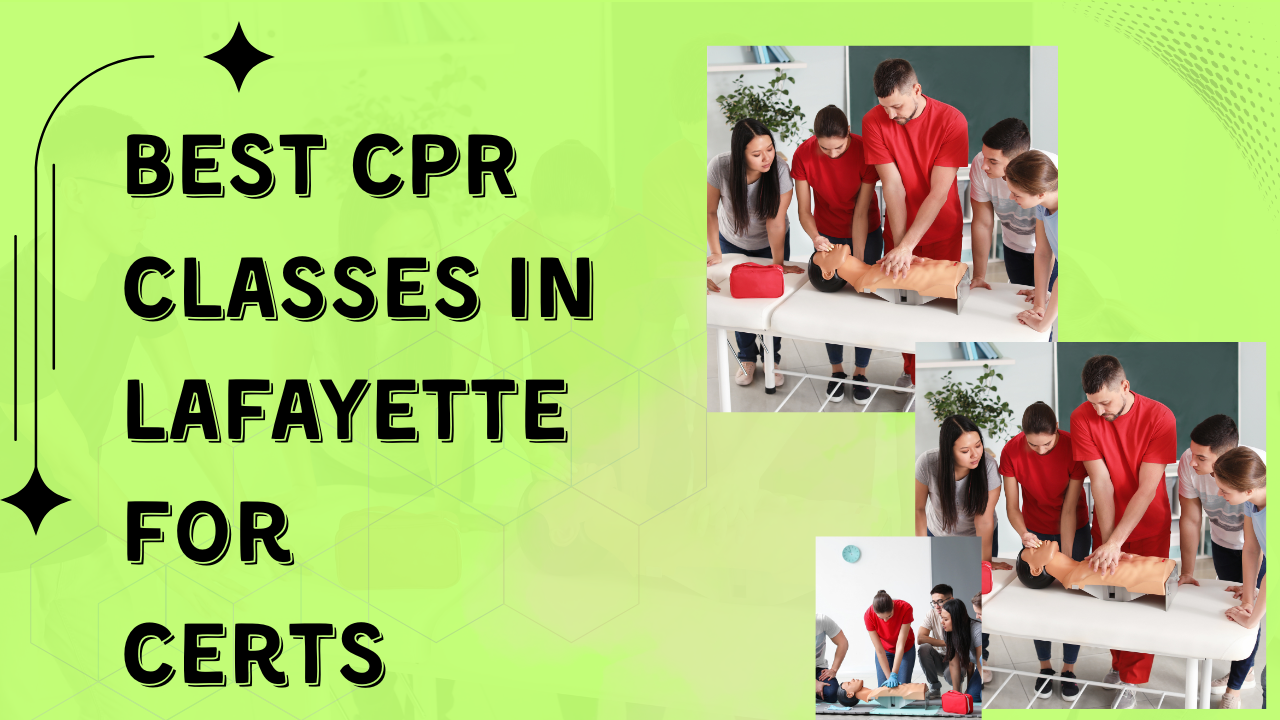
In a sudden medical crisis, time becomes the ultimate enemy. Whether you are employed in a high-acuity intensive care unit, a local family practice, or you simply want the ability to protect your family in an emergency, acquiring the proper training is non-negotiable. Locating high-quality [**CPR Classes in Lafayette**](https://cprcart.com/locations/louisiana/lafayette/) serves as your crucial first step toward building the competence and assurance required to act decisively during a life-or-death situation.
Unpredictable health crises happen everywhere—from living rooms to corporate offices. The critical factor separating a tragic outcome from a survival story is often the immediate intervention of a bystander or medical professional. By completing a nationally recognized training program, you arm yourself with the latest American Heart Association protocols dictating how to manage sudden cardiac arrest, severe respiratory distress, and other critical failures.
## The Value of Professional Credentialing
Aside from the inherent moral duty of knowing how to preserve human life, holding an active life support credential is a rigid professional requirement across numerous industries. Hospitals, EMS agencies, and fire departments demand these certifications before you can even step through the door. Additionally, many non-medical sectors—including daycare centers, public schools, and industrial job sites—are increasingly requiring this training to guarantee a safer working environment.
However, emergency response education is not one-size-fits-all. The medical community relies on a structured hierarchy of life support tiers. Understanding exactly which level of credentialing aligns with your career goals is just as vital as the educational material itself. Let us explore the various tiers of emergency response certifications and the specific focus of each.
### The Bedrock of Care: Earning Your BLS Card
For individuals launching a career in healthcare, the Basic Life Support credential represents the absolute bedrock of emergency care. A [**BLS Card**](https://cprcart.com/classes/bls/) verifies that you have successfully demonstrated proficiency in core cardiopulmonary resuscitation and fundamental cardiovascular interventions for patients of all ages.
This specific certification places a heavy emphasis on the physical mechanics of delivering effective chest compressions, maintaining proper ventilation ratios, and rapidly deploying an Automated External Defibrillator (AED). The educational framework is structured around both solo rescuer scenarios and coordinated team responses. You will master how to swiftly evaluate a victim, trigger the emergency medical response network, and sustain perfusion to the brain and essential organs until higher-level care arrives.
Securing this credential demands a blend of cognitive understanding regarding the physiology of resuscitation and a physical demonstration of capability. The practical portion of the program guarantees you can execute compressions at the appropriate depth and tempo—a physically rigorous but entirely necessary component of effective patient care.
### Elevating Clinical Expertise: The ACLS Card
While foundational life support focuses on preserving vital organ function during the initial minutes of a crisis, Advanced Cardiovascular Life Support takes over as a patient transitions into a clinical setting. An [**ACLS Card**](https://cprcart.com/classes/acls/) is an indispensable prerequisite for advanced practice providers, paramedics, registered nurses, and physicians.
This elevated level of training moves well past basic chest compressions and rescue breathing. It delves deeply into the pharmacological interventions required during cardiovascular emergencies, educating you on precisely which medications to push during a resuscitation attempt. You will also learn to interpret electrocardiograms (ECGs) rapidly, allowing you to identify dangerous arrhythmias such as ventricular fibrillation, pulseless electrical activity, and asystole.
Crucially, the curriculum highlights the importance of team leadership and clear communication. During an actual code situation, disorganization can be fatal. Advanced training teaches you how to establish a definitive chain of command, delegate tasks efficiently among responding staff, and utilize closed-loop communication to ensure every critical intervention is executed flawlessly.
### Focusing on the Youngest Patients: The PALS Card
Treating an adult in cardiac distress differs drastically from handling a critically ill infant or child. Children typically experience cardiac arrest as a secondary result of respiratory failure or profound shock, whereas adults usually suffer from a primary cardiac event. Because of these physiological differences, specialized education is required. A [**PALS Card**](https://cprcart.com/classes/pals/) indicates that a medical professional has completed specialized training in Pediatric Advanced Life Support.
This credential is absolutely vital for anyone employed in pediatric emergency departments, neonatal intensive care units, or general pediatrics. The coursework provides a highly systematic approach to evaluating and treating severely ill children. You will learn to recognize the subtle early signs of respiratory compromise and shock, intervening before the child deteriorates into full cardiopulmonary arrest.
Because managing a critically ill child is both emotionally taxing and technically complex, the education provides specific methodologies for calculating exact medication dosages based on pediatric weight. It also ensures proficiency in utilizing age-appropriate medical tools, such as pediatric bag-valve-masks and length-based resuscitation tapes.
### Choosing the Ideal CPR Classes in Lafayette
When you are prepared to tackle your certification requirements, you need an educational facility that offers a streamlined, user-friendly experience. The most effective CPR Classes in Lafayette will feature a blended learning model designed to accommodate a hectic schedule.
Seek out programs that utilize an online module for the academic portion and written testing, followed by a brief, face-to-face skills evaluation. This hybrid method allows you to absorb the clinical guidelines at your own speed from your home, eliminating the need to spend an entire weekend sitting in a lecture hall. You only need to attend a short, in-person session to physically demonstrate your techniques on medical training manikins, making the entire process highly efficient.
Furthermore, it is essential to verify that your chosen training center issues official AHA certification documents. These are the gold standard recognized across the medical industry. Upon successfully finishing the program, your credentials should be processed immediately, granting you instant access to a digital e-card while the hard copy is sent through the mail.
### Navigating the Skills Evaluation
Whether you are mastering the fundamentals or tackling complex pharmacological protocols, the educational environment is structured to foster success and build confidence. You will begin by reviewing the most current AHA clinical updates through interactive case studies and visual aids.
During the practical testing phase, you will utilize high-fidelity training equipment that gives you immediate feedback on your compression rate and hand placement. For advanced courses, you will participate in simulated megacode scenarios where you will lead a team through a mock resuscitation. The entire focus remains on practical application, ensuring that if you ever face a real emergency, your training takes over through pure muscle memory.
### Staying Ahead of Expiration Dates
Keep in mind that these vital emergency credentials come with a strict two-year expiration window. The science behind resuscitation is continuously evolving, and the AHA routinely updates its clinical guidelines based on new peer-reviewed research. Allowing your credentials to lapse means you will be forced to repeat the entire initial program from the very beginning.
To avoid this hassle, look for a certification facility that provides accelerated renewal courses. These update programs are tailored specifically for individuals who already possess a current or recently expired credential, allowing you to quickly review the newest protocols and demonstrate your practical proficiency without sitting through the basic foundational education again.
### Final Thoughts
Equipping yourself with emergency response capabilities is a profound responsibility that yields lifelong benefits. Whether you need an entry-level credential for a new healthcare role or you are upgrading your advanced clinical skills, prioritizing this education is a direct investment in your professional future and your community. Do not procrastinate until a crisis occurs to wish you had taken action. Register for a program today, secure your official credentials, and position yourself to be the decisive factor when every second matters.